
J-Hook is the next-generation billboard banner tensioning system — engineered to save time, protect your investment, and outlast every campaign you run.
OUT-OF-HOME INDUSTRY INNOVATION
Faster Flightings.
Fewer Blow-Outs.
Built to Last.
Order your J-Hooks
GET YOUR J-HOOKS TODAY✦
HOW IT WORKS
Up. Tensioned. Done.
In a fraction of the time.
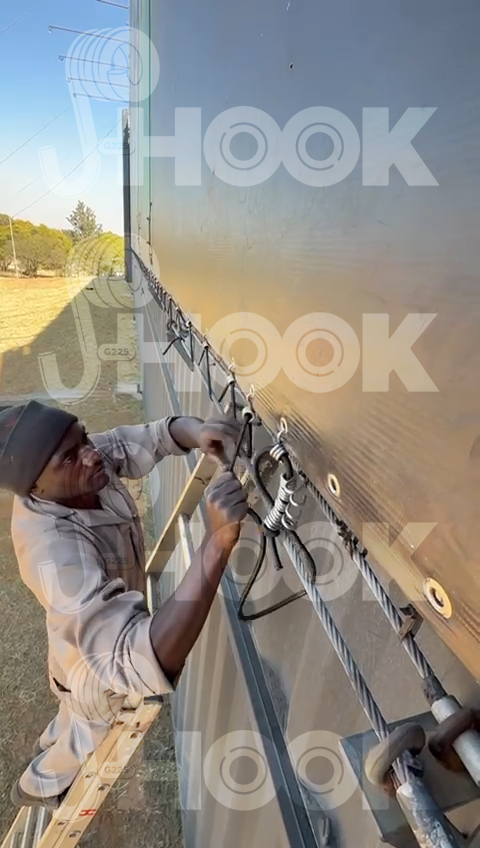
Watch J-Hook on a live billboard installation. See how quickly a single operator can flight a banner — no specialist tools, no wasted cable ties, no re-dos.
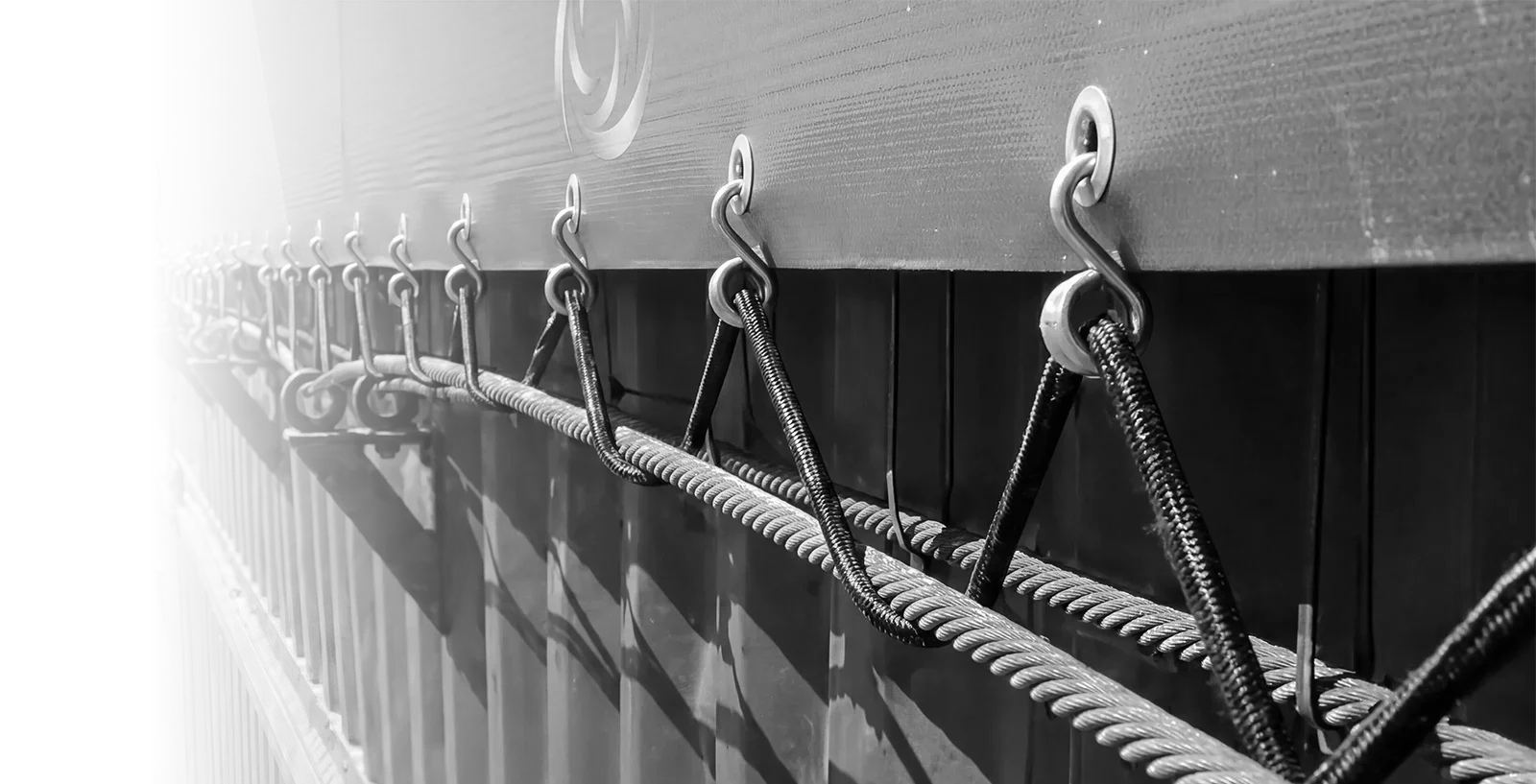
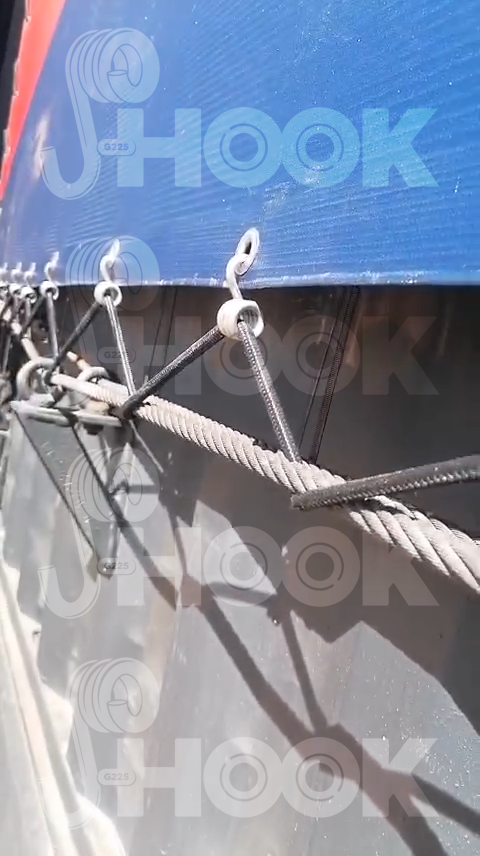
The system is simple by design: the J-hook clips onto the frame rail, the stretch cord threads through, and the banner sits flat, tensioned, and wind-ready in minutes.
Engineered for the Out-of-Home Industry
The billboard industry moves fast.
J-hooks were designed and manufactured for exactly that — efficient, safe, and reliable banner flightings, campaign after campaign.
Faster Installations
Flight banners dramatically faster than traditional cable-tie methods. J-hooks clip, cord threads, tension set — your crew is done and on the road sooner.
Virtually Indestructible
Unlike single-use cable ties, J-hooks are built to last the life of the billboard frame. Reuse them campaign after campaign — zero replacements needed.
Blow-Out Protection
J-hooks with stretch cord balance catenary and wind-load forces. Banners stay flat in calm and extreme wind, without the snap-tension that breaks cable ties.
Real Cost Savings
Stop buying cable ties every flight. J-hooks are a one-time investment that pays back immediately. Your stretch cord is reusable too — zero waste, pure saving.
A Flat, Sharp Face
The right balance between sag and tension means banners always look professional — no creases, no bagging, no client complaints about display quality.
Save the Stretch Cord
J-hooks stay on the frame between campaigns, so does your stretch cord. No cutting, no waste — the cord is ready to go for the next flight, every time.
SYSTEM COMPARISON
Why Cable Ties Fail —
and How J-Hooks Fix It
Every billboard operator has faced a blow-out.
The physics is the culprit — and J-hooks are the engineered solution.

High Tension = Low Sag = Blow-Out Risk
To make a banner look perfectly flat, enormous horizontal tension is required. As sag decreases, the pulling force at every anchor point increases exponentially. This is precisely why cable ties snap and eyelets tear out — especially in wind. The result: lost banners, lost client revenue, and costly re-flights.
Low Tension = High Sag = Client Complaints
Allowing the banner to droop reduces anchor-point stress dramatically — but creates a creased, loose-looking display that undermines the client’s brand and your reputation.
J-Hook + Stretch Cord = The Perfect Balance
J-hooks and stretch cord work together to balance catenary and wind-load forces. Banners appear flat in both calm and windy conditions, without dangerous snap-tension at the anchors. The stretch cord absorbs wind gusts dynamically — the banner breathes with the weather instead of fighting it.
Order your J-Hooks
GET YOUR J-HOOKS TODAY✦
EASY UPGRADE
From Pocket & Bar to J-Hook in 3 Simple Steps
Already running a Pocket & Bar system?
You don’t need to replace your frames. The existing J-bolts and round bars become the cable frame — and J-hooks slot right in.
01
Use your existing J-bolts and round bars as the cable frame. No new steelwork, no expensive modifications — your current infrastructure becomes the foundation.
02
Clip J-hooks onto the frame rails around the banner perimeter. They remain permanently between campaigns — no removal, no re-installation each time.
03
Thread stretch cord through the J-hooks, tension to the correct catenary, and the banner is live. Flat, wind-ready, and professional — every single time.
THE STORY
Three Decades of Billboard Innovation
Early 1990s Transition: As large-format digital printing became viable, advertisers transitioned from 24-sheet paper posters to durable PVC flexface banners. This required a way to keep heavy PVC flexface banners taut over long periods, leading to the development of mechanical tensioning apparatuses around 1991. Thus the Pocket & Bar and J-bolt were invented.
The cable and eyelet system (often referred to as the "eyebolt and bungee" or "cable-frame" system) gained significant traction in the billboard industry during the late 1990s and early 2000s.
Reasons for the Transition
The industry moved toward cable-based tensioning for several key operational and design reasons.
Adaptability to Non-Standard Shapes
Unlike rigid bars, flexible cables can be tensioned around curves, cylindrical towers, or wavy architecture. This allowed advertisers to place “wallscapes” and wraps on unconventional building surfaces.
Wind Relief and Longevity
Cable systems often use a combination of mesh PVC and flexible bungee cords or cable ties. This flexibility allows the banner to “give” slightly in high winds, reducing the sail pressure that can snap rigid J-bolts or tear PVC pockets.
Reduced “Hardware Shadow”
Large J-bolts and bulky perimeter frames can create shadows or cover parts of the advertisement. Slim cables and recessed eyebolts provide a cleaner aesthetic, keeping the focus entirely on the creative work.
Cost-Effectiveness for Large Formats
For “extra big” displays, using a peripheral eyelet system with cables and tighteners is often more economical than sourcing and transporting massive 40-foot tensioning bars.
Ready to Stop Losing Banners?
Order J-hooks through our appointed South African distributors.
Your crew will thank you on the very next flight.
500+ Satisfied Customers
Vantage Digital
Wide-format print and OOH supplies
RD Branding
Branding and signage supply specialists
Ad Supplies
Advertising and outdoor media supplies